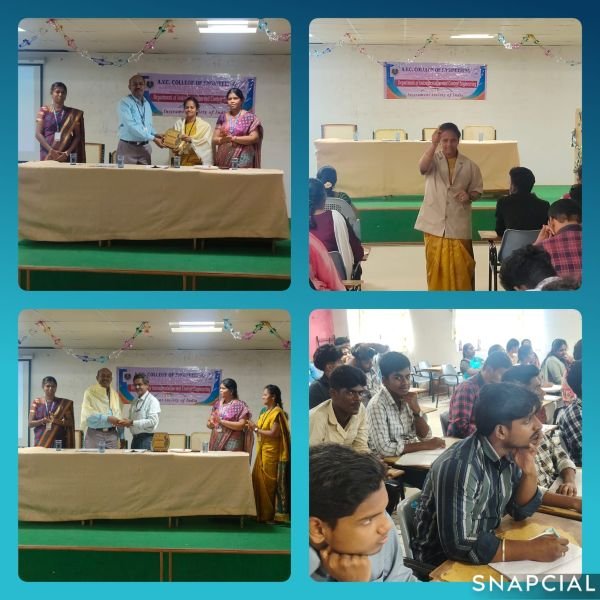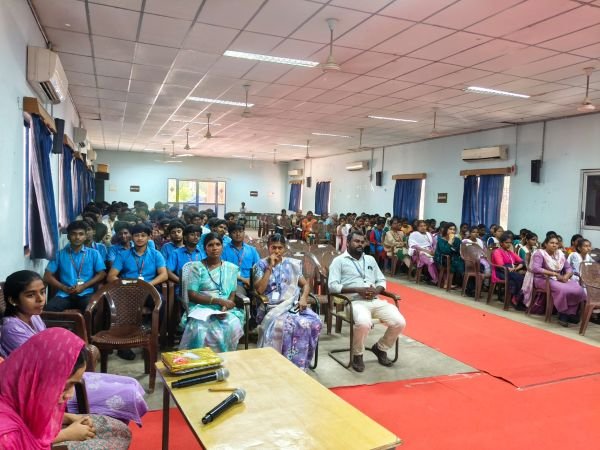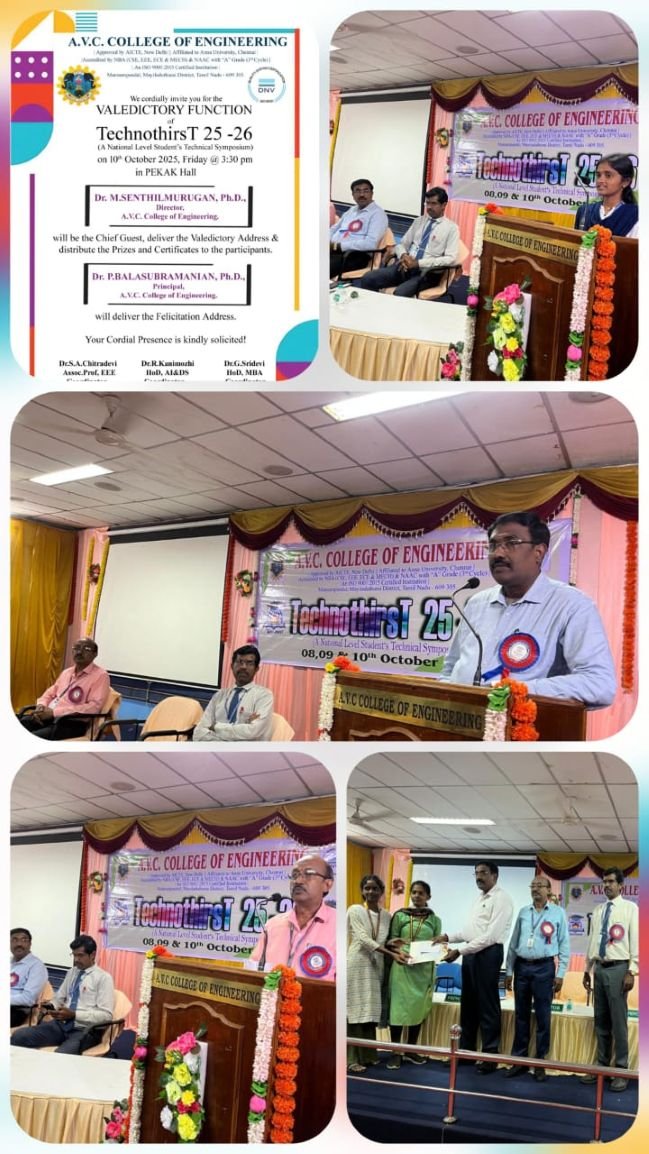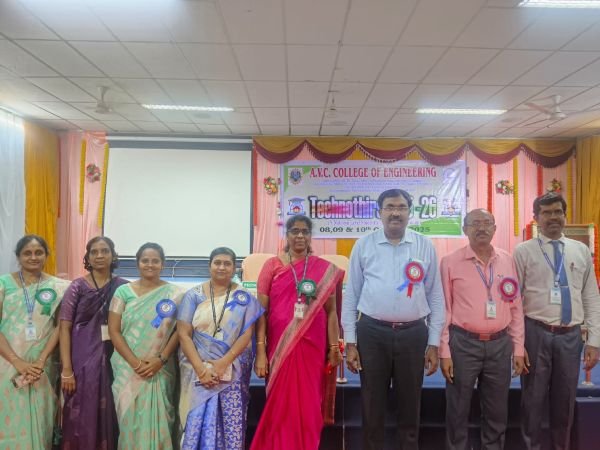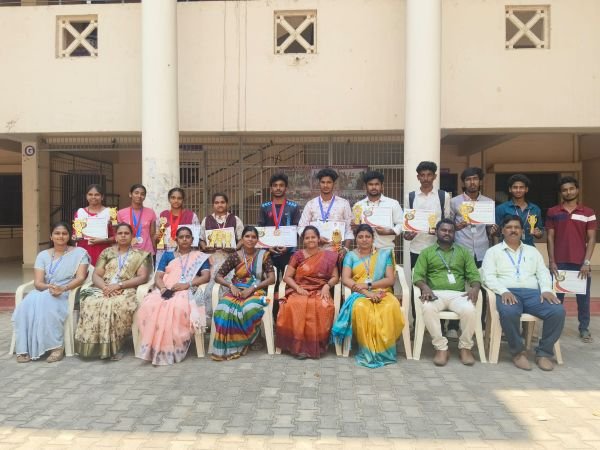
Artificial Intelligence and Data Science is the science of enabling machines to learn from data and make intelligent decisions that benefit society. It is an emerging and dynamic field that integrates computer science, statistics, and domain knowledge to analyze and interpret large volumes of data. The Department of Artificial Intelligence and Data Science was established in the year [2024]. The department is equipped with modern infrastructure and a team of dedicated faculty members who bring in-depth knowledge and practical expertise. It aims to nurture innovative and skilled professionals to meet the growing demand for AI and data-driven solutions across industries.
VISION
To be a premier hub of Artificial Intelligence and Data Science, fostering innovation, research, and technological advancements for the benefit of society.
MISSION
● To provide a comprehensive education that integrates foundational principles with practical applications, preparing students for global careers in AI and data science.
● To establish state-of-the-art laboratories, computing resources, and digital platforms that support cutting-edge learning and research in AI and data science.
● To promote ethical AI development and responsible data science practices, ensuring technological advancements contribute positively To society and global well-being.
● To strengthen academia-industry partnerships, facilitating internships, collaborative projects, and entrepreneurial initiatives that drive AI-driven solutions for industiral and societal growth.
● To foster a research-driven environment that promotes innovation in Artificial intelligence, To address real-world challenges.
-
Database Design and Management
-
Design and Analysis of Algorithms
-
Data Exploration and Visualization
-
Artificial Intelligence
-
Operating System
-
Machine Learning
-
Fundamentals of Data Science and Analytics
- Deep Learning
Programme Educational Objectives (PEOs)
Graduates can
1. Utilize their proficiencies in the fundamental knowledge of basic sciences, mathematics, Artificial Intelligence, data science and statistics to build systems that require management and analysis of large volumes of data.
2. Advance their technical skills to pursue pioneering research in the field of AI and Data Science and create disruptive and sustainable solutions for the welfare of ecosystems.
3. Think logically, pursue lifelong learning and collaborate with an ethical attitude in a multidisciplinary team.
4. Design and model AI based solutions to critical problem domains in the real world.
5. Exhibit innovative thoughts and creative ideas for effective contribution towards economy building.
Programme Outcomes(POs)
PO# Graduate Attribute
1. Engineering knowledge: Apply the knowledge of mathematics, science, engineering fundamentals and an engineering specialization to the solution of complex engineering problems.
2. Problem analysis: Identify, formulate, review research literature, and analyze complex engineering problems reaching substantiated conclusions using first principles of mathematics, natural sciences, and engineering sciences.
3. Design / development of solutions: Design solutions for complex engineering problems and design system components or processes that meet the specified needs with appropriate consideration for the public health and safety, and the cultural, societal, and environmental considerations.
4. Conduct investigations of complex problems: Use research-based knowledge and research methods including design of experiments, analysis and interpretation of data, and synthesis of the information to provide valid conclusions.
5. Modern tool usage: Create, select, and apply appropriate techniques, resources, and modern engineering and IT tools including prediction and modeling to complex engineering activities with an understanding of the limitations.
6. The engineer and society: Apply reasoning informed by the contextual knowledge to assess societal, health, safety, legal and cultural issues and the consequent responsibilities relevant to the professional engineering practice.
7. Environment and sustainability: Understand the impact of the professional engineering solutions in societal and environmental contexts, and demonstrate the knowledge of, and need for sustainable development.
8. Ethics: Apply ethical principles and commit to professional ethics and responsibilities and norms of the engineering practice.
9. Individual and team work: Function effectively as an individual, and as a member or leader in diverse teams, and in multidisciplinary settings.
10. Communication: Communicate effectively on complex engineering activities with the engineering community and with society at large, such as, being able to comprehend and write effective reports and design documentation, make effective presentations, and give and receive clear instructions.
11. Project management and finance: Demonstrate knowledge and understanding of the engineering and management principles and apply these to one‘s own work, as a member and leader in a team, to manage projects and in multidisciplinary environments.
12. Life-long learning: Recognize the need for, and have the preparation and ability to engage in independent and life-long learning in the broadest context of technological change.
PROGRAM SPECIFIC OBJECTIVES (PSOs)
Graduates should be able to:
1. Evolve AI based efficient domain specific processes for effective decision making in several domains such as business and governance domains.
2. Arrive at actionable Foresight, Insight, hindsight from data for solving business and engineering problems
3. Create, select and apply the theoretical knowledge of AI and Data Analytics along with practical industrial tools and techniques to manage and solve wicked societal problems
4. Develop data analytics and data visualization skills, skills pertaining to knowledge acquisition, knowledge representation and knowledge engineering, and hence be capable of coordinating complex projects.
5. Able to carry out fundamental research to cater the critical needs of the society through cutting edge technologies of AI.

HOD's Desk
The Department of Artificial Intelligence and Data Science is dedicated to
equipping students with the latest advancements in data-driven technologies and
AI methodologies. Our goal is to foster an environment that encourages
innovation, analytical thinking, and hands-on learning experiences.
We offer a curriculum that blends theoretical foundations with practical
applications in AI, Machine Learning, and Big Data. Our faculty, with their
diverse expertise, are committed to mentoring students and guiding them through
academic and industry-oriented research.
The department emphasizes interdisciplinary collaboration, industry
partnerships, and experiential learning through internships, projects, and
workshops. We take pride in cultivating not just technically sound engineers,
but also responsible individuals ready to make meaningful contributions to
society.
I welcome you to explore our department and be part of our journey in shaping
the future through Artificial Intelligence and Data Science.
Professor & HOD
| S. No | AU-FIN | AICTE ID | Name & Designation | Photo (Passport Size) |
|---|---|---|---|---|
| 1 | 2664471985 | 1-2184570965 | Dr.R.Kanimozhi Professor & Head | 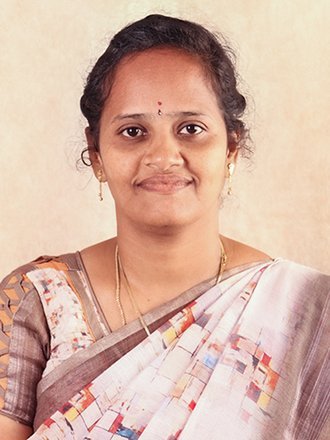 |
| 2 | 2696651994 | 1-44782409059 | Mr.G.Arulkumar Assistant Professor |  |
| 3 | 2630301990 | 1-7351706753 | Mrs.S.SILAMBARASI Assistant Professor |  |
| 4 | 2636951989 | 1-9315769871 | Mrs.S.Saranya Assistant Professor |  |
| 5 | 2665071982 | 1-500292649 | Mr.V.Satheesh Kumar Assistant Professor | 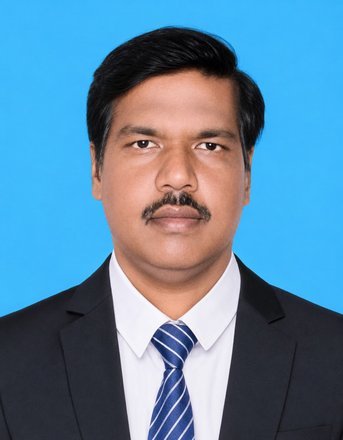 |
| 6 | 2658592001 | 1-46958084633 | Ms.M.Abinaya Assistant Professor |  |
Supporting Staff Members
| Name | Qualification | Designation |
|---|---|---|

|
B.E. | Technical Assistant |
|
|
M.Sc. | Lab Assistant |
|
|
B.Sc. | Lab Assistant |
The B.Tech Artificial Intelligence and Data Science programme is designed to equip students with strong foundations in Artificial Intelligence, Machine Learning, Data Analytics, Deep Learning, and emerging technologies, aligning with the evolving demands of the industry and research sectors.
- ISTE
- IETE